
We're not all the same — and that changes everything
Has this ever happened to you? A friend eats exactly the way you do, drops a clothing size without trying… and it just doesn't work the same for you. It isn't that you're doing something wrong. It's that your body isn't the same as theirs.
This is one of the most useful discoveries when it comes to understanding your metabolism: what suits one person doesn't suit everyone. And knowing which group you belong to completely changes the way of eating that works for you.
Your nervous system: the body's internal wiring
Picture your body as a car with an electrical system running all the way through it. That "wiring" is your autonomic nervous system: a network that automatically controls functions you never have to think about — breathing, your heartbeat, digestion, the work your glands do.
It's called "autonomic" precisely because it runs on its own, without you deciding. You don't have to remind yourself to breathe: it does it for you.
And here's the interesting part: this system has two sides, and understanding which one is dominant in you is the information you were missing.
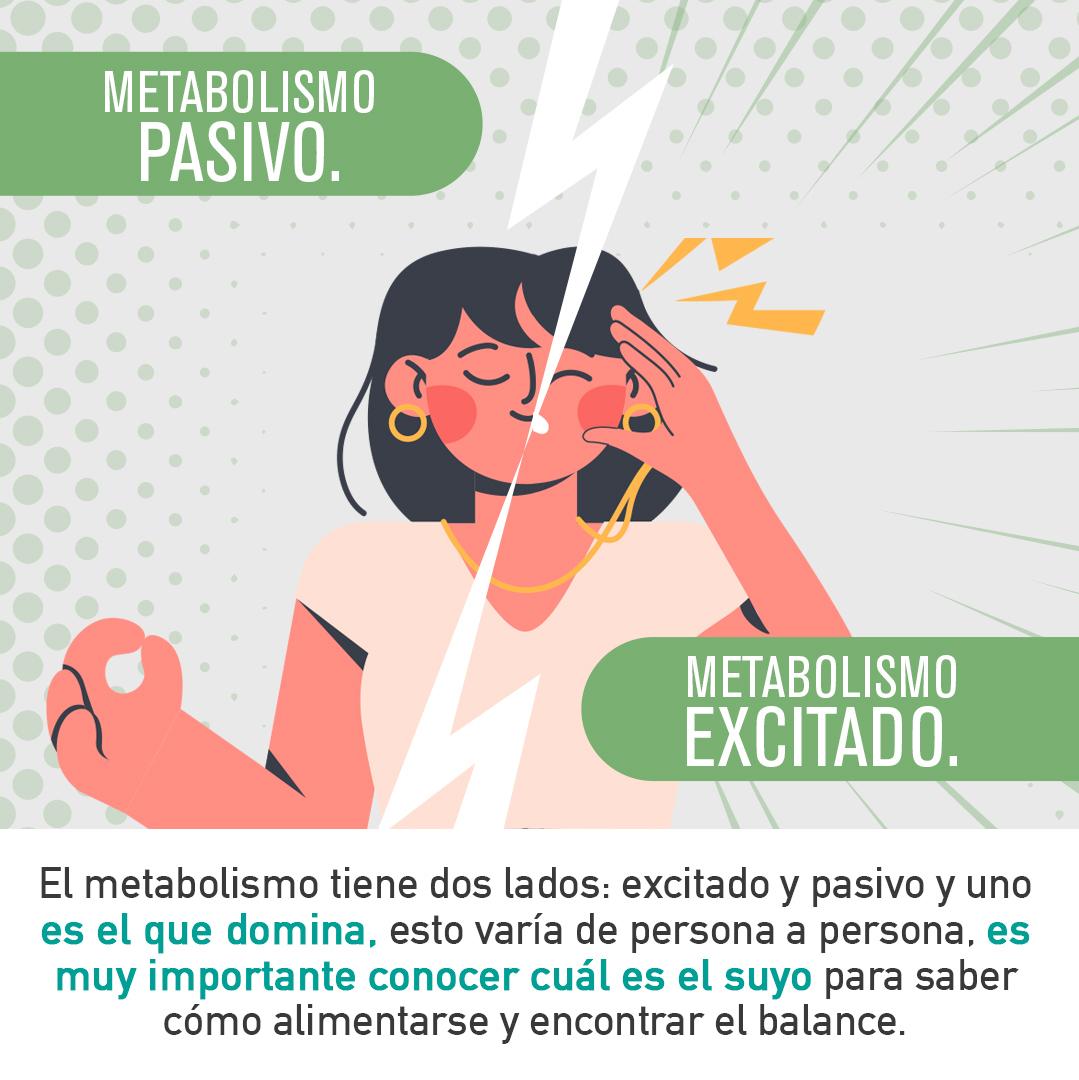
The two sides: excited and passive
In the metabolism language Frank Suárez taught, we call those two sides, simply, the excited metabolism and the passive metabolism.
- The passive side is the calm one. It's the body's "rest mode".
- The excited side is the alert one. It's "action mode".
Both sides are necessary, and we all have them. But in each person one side dominates. That's neither good nor bad — it's simply your nature. And knowing it lets you look for balance through something as everyday as what you put on your plate.
What is someone with an excited metabolism like?
A person with a predominantly excited metabolism tends to live "in motion": more active, more alert, sometimes a lighter sleeper. Their digestion is often more sensitive — especially with red meats and fats, which sit less easily, and even more so when they eat late at night.
When this side runs too fast for too long, the body settles into a state of constant tension. And a body that can't switch off has a harder time resting well and finding its balance.
What is someone with a passive metabolism like?
A person with a predominantly passive metabolism tends to be calmer and more reflective, and seeks out less physical activity. They enjoy rest — which is pleasant, but it also means their body "moves" less on the inside.
This type usually does well with the opposite of what suits the excited type: foods that stimulate the body a little more, such as proteins — red meats, cheeses, a higher proportion of healthy fats.
The same thing doesn't work for both
Here's the central lesson: the food that balances one type can throw the other off balance. The fats and red meats that suit the passive type are exactly the ones the excited type finds harder to digest.
That's why counting calories never solved the real problem. The body is alive: it learns, adapts and reacts differently depending on who you are. It isn't about eating "less" — it's about eating what your body needs for your type.
How to start looking for balance
These simple habits help calm a body that's running too fast and bring it back into balance:
- Take twenty slow, deep breaths before bed.
- Get a few minutes of sunlight a day — 5 or 10 minutes is enough.
- Try grounding (walking barefoot on grass or sand).
- Include vegetables, white meats and little salt in your diet.
- Stay well hydrated throughout the day.
The right nutrition, hydration and supplementation are three great allies when it comes to balancing your metabolism.
The role of minerals
The nervous system runs, quite literally, on electrical impulses — and certain minerals are what make that "current" possible. Magnesium is one of them.
According to the European Food Safety Authority (EFSA), magnesium contributes to the normal functioning of the nervous system and to a reduction of tiredness and fatigue. That's why it holds such an important place when we talk about caring for this internal "wiring". At NaturalSlim Europe you'll find it in the magnesium citrate MagicMag®, a powder you mix with water.
Another ally is Stress Defender™, which provides pantothenic acid (vitamin B5). B5 contributes to normal mental performance and to a reduction of tiredness and fatigue — useful precisely on those days when the body stays "on alert" and it's hard to switch off.
Knowing your type is the first step
It isn't your fault that generic diets haven't worked for you: you were missing this information. Knowing whether your metabolism leans excited or passive lets you finally choose the foods and habits that genuinely fit you.
Not sure which type you are? You don't have to work it out alone. Talk free of charge with one of our Certified Metabolism Consultants: they'll help you identify your metabolism type and take the first step, drawing on Frank Suárez's teachings. There's nothing to buy to get started.



Share:
The 3x1® and 2x1® Diet: the simple method for eating without bans
How Belly Fat Is Created (and How to Start Reducing It)